
Overview:
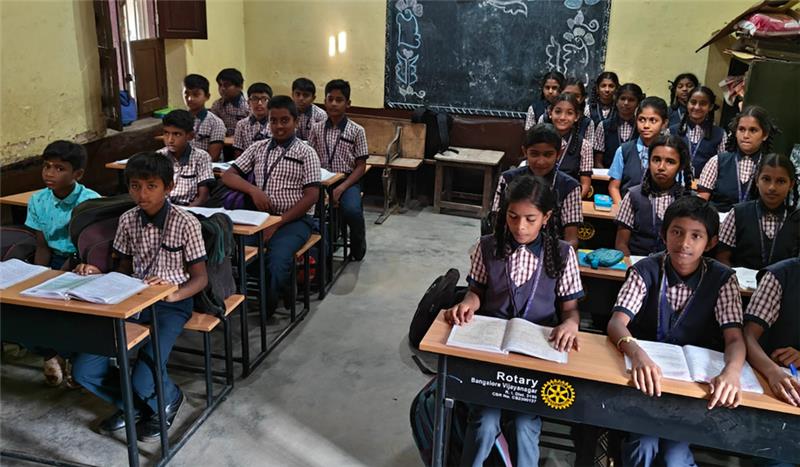
NAMMA HEMMEYA SHAALE is a CSR initiative focused on improving education and literacy in government schools in and around Mandya district. The program aims at holistic development of schools—enhancing infrastructure, learning facilities, and the overall environment to make education enjoyable and impactful for children.
Need for the Initiative:
Government schools in rural areas face challenges such as poor infrastructure, inadequate funding, and competition from private institutions. Despite having qualified and dedicated teachers, the lack of modern amenities often deters student enrolment. This project was designed to address these gaps and strengthen the public education system.
Implementation Approach:
A detailed survey and on-site inspection were conducted to assess the needs of various schools. Based on urgency, feasibility, and available budgets, priorities were set, and necessary improvements were implemented in collaboration with local school management and the School Development and Monitoring Committees (SDMCs).
Key Interventions Included:
- Construction of Toilet Blocks (with a special focus on girls’ sanitation)
- Provision of Desks, Nali Kali Tables and Chairs, School Bags
- Installation of Science Lab Kits and Smart Class Facilities
- Creation of Handwash Stations and UV/RO Water Purifiers
- Development of Indoor Play Areas and Sports Equipment
Impact:
- Over 3,500 children across 28 schools have benefited.
- Improved sanitation—especially for girls—has enhanced attendance and self-esteem.
- Smart classrooms and science labs have improved academic engagement and learning outcomes.
- Play and hygiene facilities have contributed to better morale, health, and attendance.
- The initiative has also helped reduce migration to private schools by raising the quality and appeal of government institutions.
Execution and Monitoring:
Each project was executed after obtaining local approvals and selecting vendors through competitive quotations. Work was carried out without disrupting classes and was regularly supervised. Maintenance funds were allocated for one year, with schools assuming responsibility thereafter. Rotary Club partners conducted periodic inspections to ensure sustainability.
Learnings and Way Forward:
The Mandya phase provided valuable insights into identifying genuine needs, prioritizing interventions, managing vendors, and optimizing budgets. Encouraged by its success, the model is now being replicated and scaled up in new regions closer to the implementing partners for greater efficiency.
Conclusion:
NAMMA HEMMEYA SHAALE has successfully transformed the learning environment in rural government schools—uplifting infrastructure, promoting hygiene, and enhancing the joy of learning. The project stands as a testament to how focused CSR initiatives can drive meaningful and lasting impact in rural education.